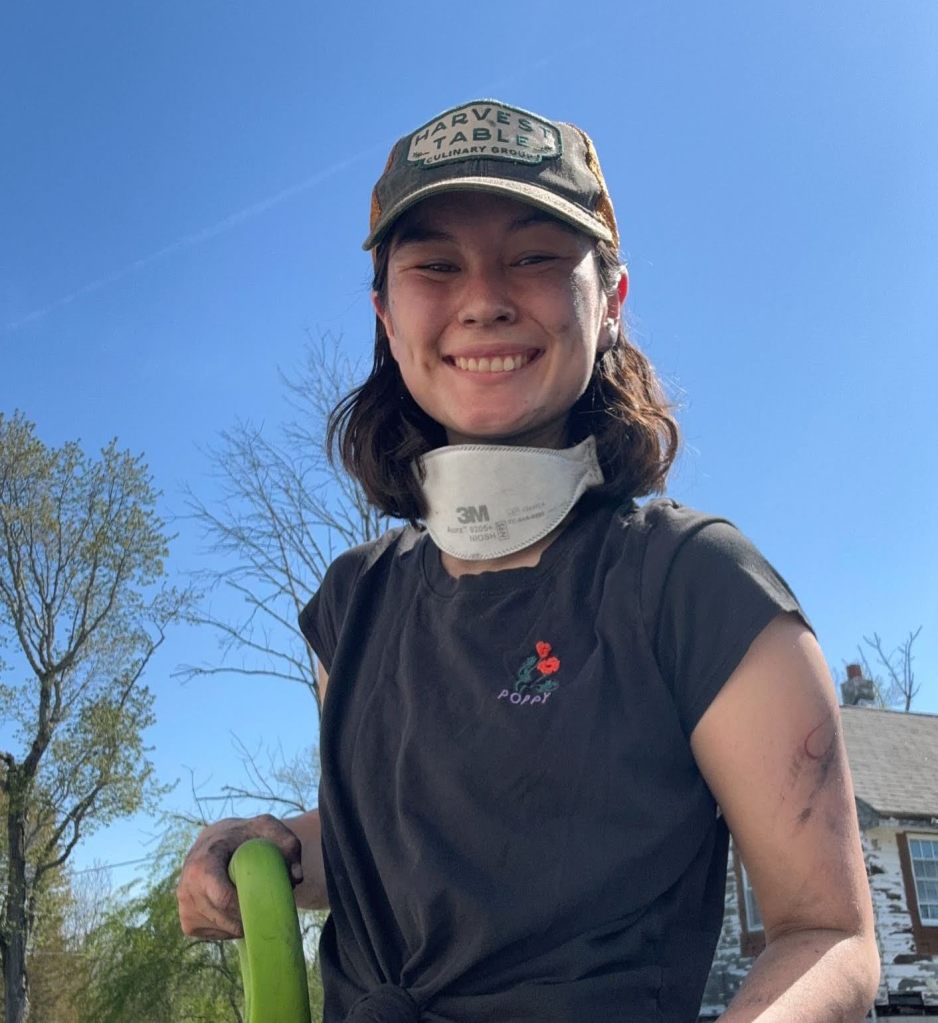
Loving God, following Jesus Christ, and being guided by the Holy Spirit; living a life of discipleship.
I am a lifelong Christian who was formed in a small, warm-hearted church where I learned to be a child of Christ, study scripture, and love God in a tight-knit community. I continue to be shaped by the deep and inspiring faith of my parents, who prayed with me as a child and continue to support my vocational journey with love. Throughout a lifetime of wrestling with big questions of meaning, poring over the most difficult passages of scripture, and fighting for a more just world, I have never walked alone. God is the foundation of all that I do, and my deepest hope in ministry is that I can help others to connect or reconnect with the deep love that knits us both to God and to one another.
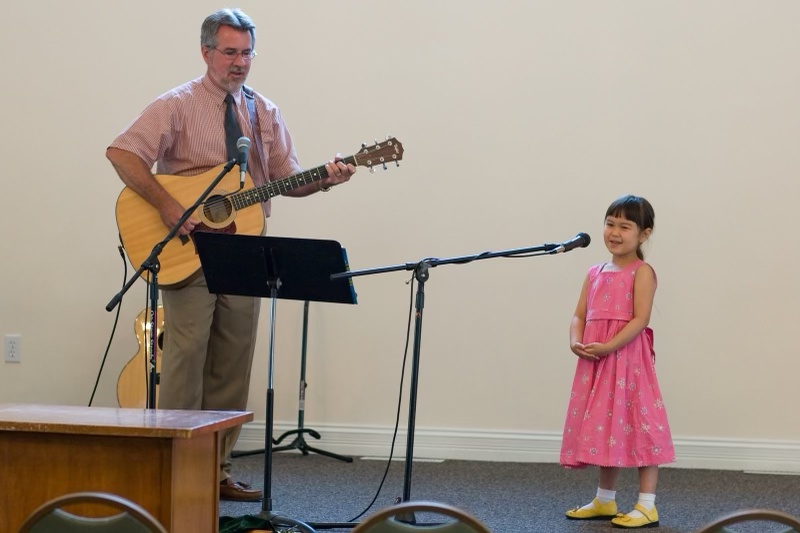
Praying actively and nurturing spiritual practices.
I feel the most connected to God when I have my hands in the dirt. I believe the Spirit is always active and at work in this world, and I especially see God’s presence through the ongoing process of creation. My personal spiritual practice includes caring for the earth and connecting with God by nurturing plants in the ground. I affirm the goodness and interconnectedness of all of God’s creatures by getting my hands dirty, building rich soil, and giving my prayers to the earth.
While in seminary, I realized I needed to strengthen my prayer life in order to do the hard and sometimes turbulent work of ministry. I set aside a little corner of my room with candles and a floor cushion where I could take time for prayer, journaling, and meditation. I have journaled my prayers since I was young, but I realized that having this space helped me to be more intentional about my practice, as well as to bring God deep feelings and hurts that I did not have the words to write down.
My sense of spirituality is what scholar Bron Taylor might call “Dark Green Religion:” a deep sense of interconnection with all living things that shapes my approach to ministry and my life of faith. Even in spaces like hospital rooms, which feel so removed from the so-called natural world, my ecological sensibilities help me to connect people to a wider sense of belonging in the world. When I have the privilege of praying for or with someone, I do my best to reflect what I have heard of their needs to God, and to imbue my prayers with or a sense of God’s wider, deeply interconnected creation.
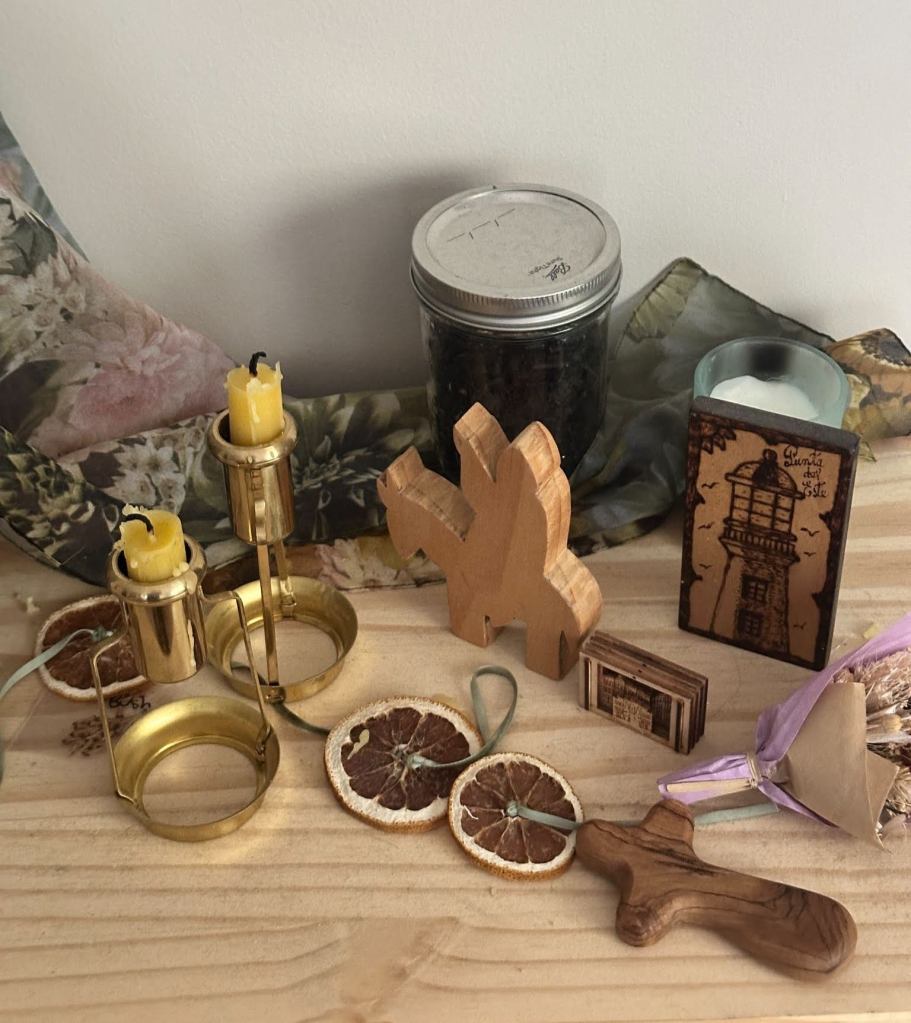
A glimpse into my contemplative corner/A place I feel God’s sweetness and care
Being called to ordained ministry by God and the Church & Continuing discernment of one’s call in community.
My call is not just something between me and God. I am figuring out how to serve the needs of my human and nonhuman community through conversation, study, and loops of feedback. I could never claim to be called to ministry by God if I had not first been called by my local church, field education supervisors, professors, and community. I see ordained ministry as a way for me to pursue my love of biblical studies and ecotheology, but even more importantly I see it as a way to bring people into relationship with one another and with their natural environment. I see it as a great honor to bring my ecological lens to the pulpit, education, and advocacy spaces in churches. I want to share my perspectives and my gifts through the work of the United Church of Christ, which I see as the perfect soil for me to root my ministry. With the support and community of an affirming, racial-justice oriented, and ecologically attentive denomination, I hope I can be a voice for young people who care deeply about the environment and the ways that environmental issues disproportionately affect queer people and people of color. I hope to bring my fierce love of wrestling with scripture and telling sacred stories to people, real people, who can use the lessons in their real lives. While I can not name the exact moment my call came, I know it is real. I know that there is an intersection between my passions and the needs of the world. I know that through God, my love might be of some use to Her creatures.
Understanding the power of the Holy Spirit at work through the elements of Christian worship to nurture faith.
I have been blessed and challenged to lead worship in many different settings, from big churches with stained glass windows, to a simple classroom at a little farm, to locked wards in behavioral health centers. The summer after my first year of seminary, I had the opportunity to serve as the liturgist at Princeton University in their historic chapel. At first, having never led worship before, I was intimidated by the prospect of writing liturgy for a different preacher and service every week of the summer. Now, after leading worship in a variety of settings, I am so grateful for the formation and creativity that I was allowed that summer. I found the rhythms of writing weekly prayers for a congregation extremely meaningful, and slowly built confidence to become the worship leader I am today.
You can watch my services from that summer here:
The next summer, I completed Clinical Pastoral Education, and had the experience of leading worship in a hospital chapel and in a behavioral health center. My floor was called “MNOP:” Medicine, Neurology, Oncology, and Psychology. Over the course of the summer, I had the deep and complicated privilege of meeting with cancer patients, and walking with them and their families through the shadow of the valley of death.
About two thirds of my way through CPE, I was asked to perform a funeral for a cancer patient who had died on my floor. Losing this patient, who was only sixty, was a dark moment for everyone who worked on my floor, and the shadow did not pass quickly. But for me, conducting a funeral, as scary as it was, ended up being an experience of unexpected joy mixed with sorrow. One of my favorite philosophers, Xunzi, writes that rituals serve as our markers when the waters get deep. It is so important for us to gather, express our emotions together, and fall into the comfort and community of our rituals when our grief is too much to bear alone. This experience, along with countless others, has shown me that how we worship together matters. The prayers we recite, the scriptures we choose, and the intention behind every piece of liturgy matters for how we move through our shared life together, both in good times and bad. As a minister, I hope to continue bringing intentionality and creativity to worship, as I help guide communities through meaning-making in the midst of both grief and joy.
You can see orders of worship from my CPE services in the appendix.
Exhibiting a commitment to lifelong spiritual development and faithful personal stewardship.
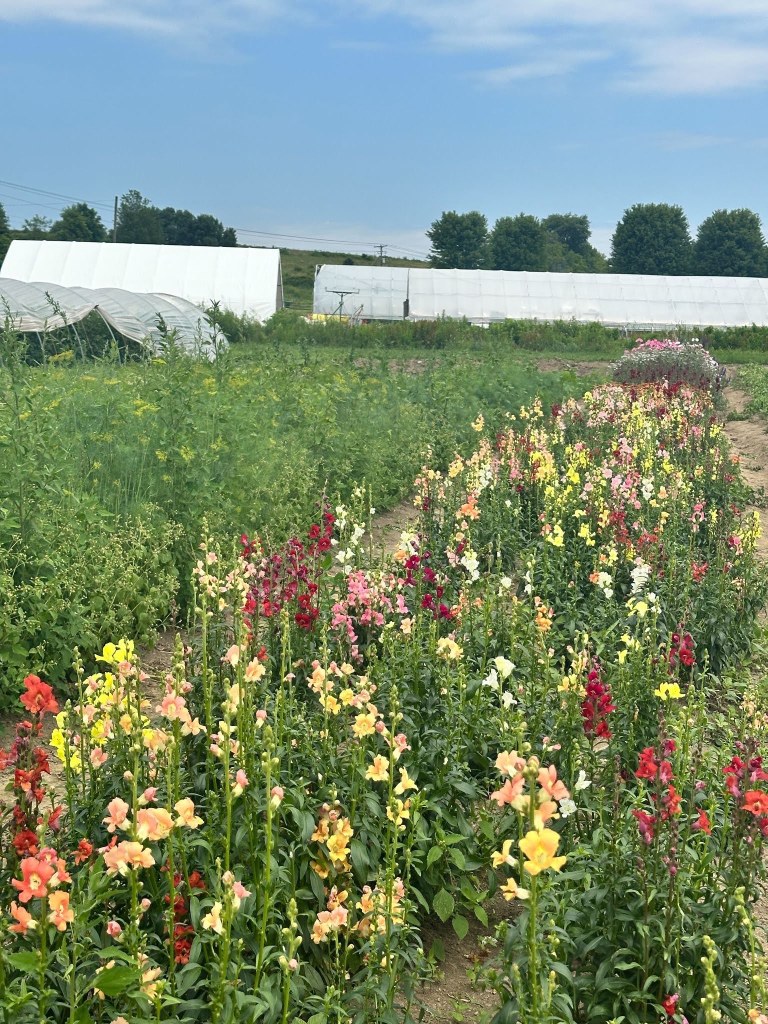
During college, and starting in the pandemic, I worked at a Community Supported Agriculture (CSA) farm for four summers. Throughout my time at Princeton Theological Seminary, I worked at the Farminary, the seminary’s small regenerative farm and outdoor classroom. So much of what I have learned about spiritual development has come through my work in the dirt. Any farmer knows that the natural world is built around change: cycles of seeds, growth, decay, and compost. As scared as we can be of change, it is an integral part of who God created us to be.
I have always been a person that tends towards anxiety, and tries to predict every possible outcome. I have struggled with perfectionism and high standards my whole life. This has been exacerbated by living in a highly individualistic society which puts enormous pressure on young people. In my work on disability studies, as well as through farming, I have learned to think of myself as a body ever-in-process, fearfully and wonderfully made, despite living with societal expectations of perfect, unchanging bodies. God made us to grow and stretch and decay, to move through time in cycles, and always to change.
As I enter ministry, I know that I am not a finished product. I have not learned everything in seminary— not even close! Rather, I am part of a story I did not start and I will not finish, one that is so much bigger than my work on this earth. I am as dynamic and unfinished as the arc of God’s vision. I am excited to keep learning, keep listening for God’s voice, and to walk with people through all stages of life. In my work with people of all ages, but perhaps most of all with young people, I hope to communicate that God loves us and made us just as we are, no matter what change we are going through, no matter how our bodies look or what we achieve.
From my reading of Song of Songs 4:7, full essay here:
“The whole of you is beautiful, my love
(your stretchiness, your strangeness, your all-too-much);
there is nothing at all that disqualifies you from our shared life together.”