
Nurturing care and compassion for God’s creation & Providing hope and healing to a hurting world.
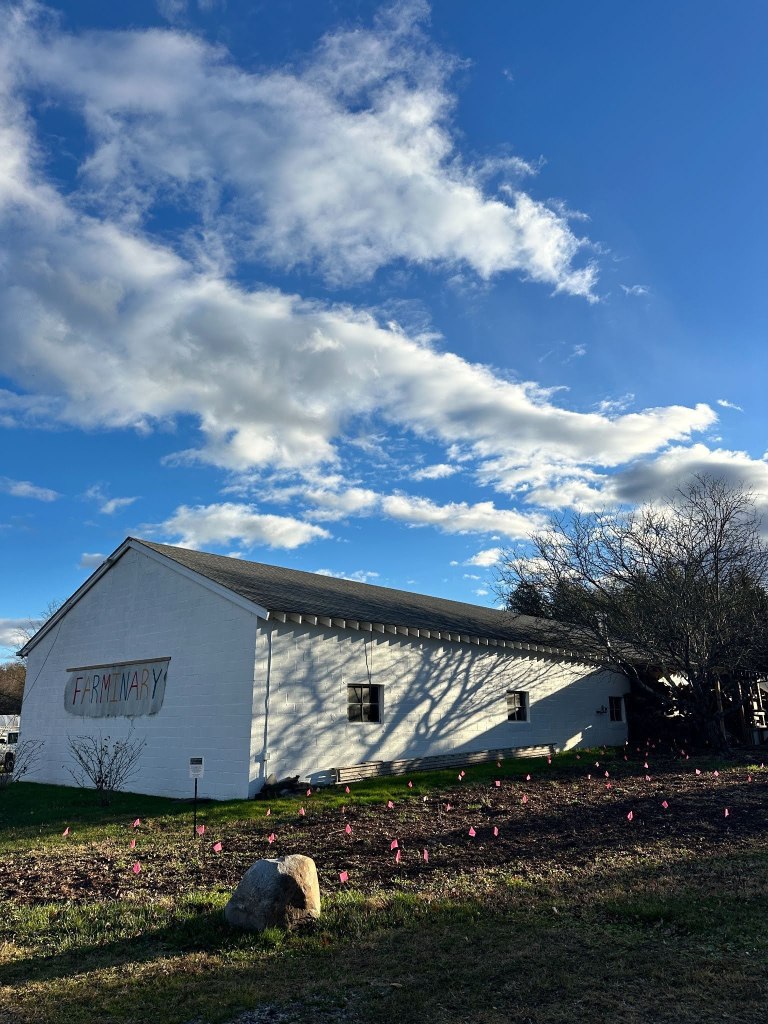
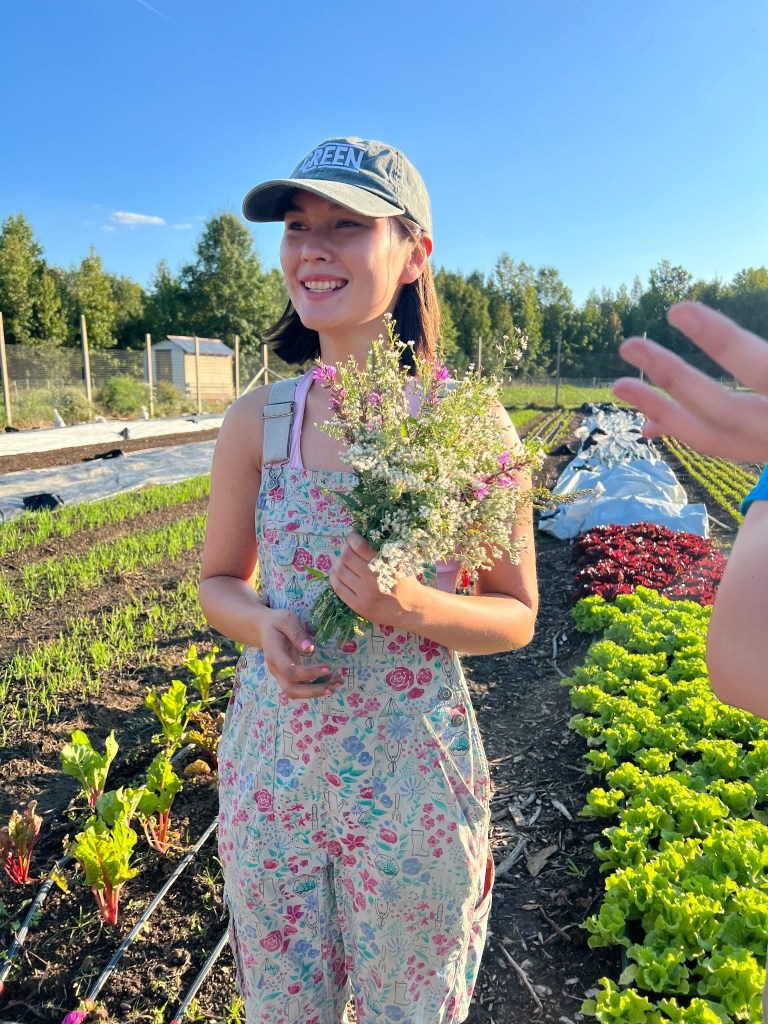
One of the ways I cultivate connection with God’s creation is through my experience as an environmentalist and regenerative farmer. My spiritual identity and sense of faith-based justice has been nurtured in tandem with my ecological sensibilities, and I work to connect people to the wider natural world through my preaching, liturgy, and pastoral care. Over the past three years I have worked at the Farminary, Princeton Theological Seminary’s farm and outdoor classroom which seeks to explore the intersections of theological education and regenerative agriculture. As the Farminary’s communications coordinator, I shared the farm’s mission both by welcoming groups of all ages (and farming abilities) to our space and by writing and designing digital media about regenerative agriculture, intersectional environmentalism, and ecotheology. I love to lead conversations about regeneration, spirituality, and the interconnectedness that ties us as humans to the soil.
Examples of my work for the Farminary:
One of the principles I carry with me from the farm is that we are capable, as humans, of working with creation to bring healing and restoration to places that are barren and bear the marks of exploitation. The Farminary used to be a sod farm, where they literally would strip layers of grass and soil, leaving the land unhealthy. Afterwards, it was a christmas tree farm, because pines were one of the only things easy to grow in the degraded soil. The ground at the farm still witnesses to this type of relationship with the land. But at the Farminary now, we are building soil, instead of stripping it away. We produce enormous amounts of compost from the seminary’s food waste, which is an excellent site for conversations about death and renewal, but is also excellent for crops. We rotate our chickens and sheep so that they can better “fertilize” the soil. And we use cover crops, disturb the soil as little as possible, and allow it to rest or go fallow between cycles of growth.
Isaiah 35:7 imagines God’s restoration of this world through ecological succession. The prophet describes habitats changing, dried out grasses becoming lush reeds, growing healthy and tall towards the sky. God’s promise manifests through a healthy, balanced ecosystem that blooms with abundance enough for all. The Farminary is not perfect, but it is a place, like so many others, where people are trying to participate in God’s vision of restoration. While I’m not sure how much I will be farming in the future, I know I will try to be gentle with our earth wherever we go, and keep imagining and proclaiming God’s promise that we all will live in harmony once more.
“For waters shall break forth in the wilderness
and streams in the desert;
the burning sand shall become a pool
and the thirsty ground springs of water;
the haunt of jackals shall become a swamp;
the grass shall become reeds and rushes.” Isaiah 35:6-7
Maintaining a basic understanding of mental health and wellness.
As a minister, I feel that it is very important to honor the distinction between my work and the work of trained clinicians. Yet, I also know firsthand that a person’s mental health and wellness will determine what kind of spiritual care they require. Throughout my experience of Clinical Pastoral Education (CPE), I worked with people going through incredibly painful experiences, both physically and mentally. My floor included patients hospitalized for psychological disorders, and I quickly learned that I might not see quite the same reality as the person in front of me. I learned to practice careful self-supervision, to be careful of any biases or presuppositions about an individual experiencing hallucinations or delusions, and to respond to feelings rather than arguing about the content of a person’s words. I also developed an instinct to give individuals as much autonomy and control as possible in an environment that can be dehumanizing. While I am no longer working in a hospital, my experiences in CPE have shaped how I approach parish ministry, where I work to destigmatize mental health issues in my pastoral care encounters. To borrow a phrase from my Jesuit education, I believe in cura personalis, or care of the whole person. That includes the messy, uncomfortable, and even darker aspects of our human existence. I bring an open, empathetic, nonjudgemental approach to congregant well-being, and share from my own mental health experiences when appropriate.
Practicing self-care and life balance.
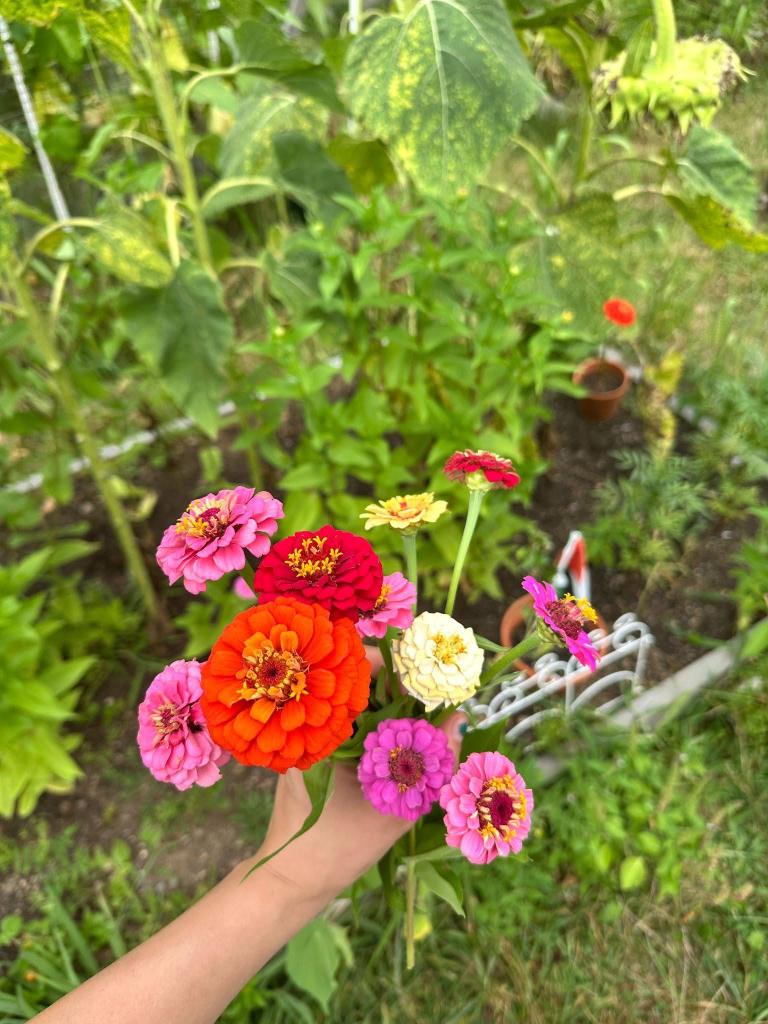
Self care and boundaries are very important to me, and I continue to nurture care for myself and my body as I move through the sometimes difficult and heavy world of ministry. In my CPE internship at Penn Medicine, I had to be particularly intentional about setting boundaries and taking care of myself after long days at the hospital. Over the course of the summer, I developed a practice of watering my garden after work, and returning all the heaviness and the stories I had heard over the course of the day to God through the ground. This practice helped me to carve out a space just for myself and to set boundaries between work and home, while still honoring my patients and the importance of my work with them.
As I transition to full time ministry, I am living into new rhythms and balances. While I imagine the practice of boundaries takes a lifetime to perfect, and I am not always perfect at keeping “work” and “life” separate, I try to be very intentional about setting aside time for self-care and community connection. In this season of my life, that means lots of walks in the beautiful New England fall, taking salsa classes with my best friend, picking up our CSA vegetables and cooking a weekly meal with my wonderful co-resident/housemate, and meeting with a therapist to attend to my own mental health. By taking care of myself as a whole person, I can show up with much more intention and energy to care for others.
Attending to one’s own spiritual and pastoral care, including engagement in supervision as appropriate.
I am lucky to have had incredible mentors and supervisors along my ministerial journey that I consult with to this day. I am the minister I am because of my pastor back home in Upstate New York, my college chaplain who first helped me see myself as a minister, and the pastoral supervisors throughout my graduate education who taught me, gave me feedback, and modeled what it is to be a healthy and loving leader. I still keep in touch with all of my pastoral mentors, and am so grateful that I will never be alone in the work of ministry. I am also thankful for the support and supervision that had come through the Member in Discernment process, especially through my advisors.
I feel especially fortunate to be in a two-year residency that prioritizes supervision and mentorship. I engage in bi-weekly “residency seminars” where I am able to bring my questions and things I hope to learn to the full-time pastors at my church. This is where I am able to workshop ideas for programming, get advice on pastoral boundaries, and ask about the things I simply did not learn in seminary. Recently, we spent a productive hour just discussing how to handle the “handshake line” after church! I am glad I chose a first call that has so much feedback and learning built in, and am grateful I get to grow in a community of pastors that are both experienced and warm-hearted.

Stewarding the resources of the Church.
My understanding of budgets and resource management were a growing edge that I addressed by attending the finance week of Iron Sharpening Iron, a women’s leadership conference hosted at Princeton Theological Seminary. As I mentioned in my leadership section, through this program, I received mentorship and career coaching, and attended workshops on financial literacy and budget management. I now feel that I have a better understanding of narrative budgets, capital campaigns, and communicating about stewardship through the language of a church’s core values. I also have been lucky enough to have incredible mentors like my supervisors for Princeton Presbyterians, who walked me through their budget so that I could understand the larger picture of what goes into campus ministry.
Money can be really hard to talk about, especially in Christian settings, where the topic might evoke shame and feelings of not meeting our values. However, I actually think this is more of a reason to talk about money, always with transparency and attention to mission. In the context of a highly individualistic and incredibly exploitative economic system, American churches have an opportunity to model something different. As I go forward into ministry, I hope to promote a culture of giving, neighborliness, and mutual aid. I hope to talk about gift economies, as articulated by the brilliant thinker Robin Wall Kimmerer, and modeled by the endless generosity of our gardens. Finally, I hope to continue learning from my mentors and supervisors about the messy, awkward, and faithful work of stewardship.

